Stratford’s riverside paths are beloved by Stratford visitors. For locals, those paths extend considerably further, following the Avon River past the Shakespeare Gardens and southwest through the Old Grove.
That’s what it used to be called, and is still called by people who grew up here. My father-in-law tells me that, when he was young, it was known as the city’s “Lover’s Lane” – a place for, ahem, privacy. It’s now known as the T.J. Dolan Natural Area – more on that in a moment. By why Old Grove? I poked and prodded through historic documents and media reports, and couldn’t find an explanation. So I turned to the professionals: the archivists at the Stratford-Perth Archives.
The response: “In regards to your query about The Old Grove, I was unfortunately not able to find a definitive answer for you. It appears that the area was always referred to as The Old Grove.”
The Avon River path system that extends east of the city proper and through to O’Loane Avenue at the west end of the city makes up the 9.8-kilometre Stratford Side Trail, one of the loops off the 130-kilometre-long Avon Trail that extends from Conestogo to St. Marys.
The Old Grove portion of the trail picks up at the Avondale Cemetery.
This 23-hectare parcel is officially the T.J. Dolan Natural Area, so named in 1985 to honour Thomas Joseph Dolan, a local newspaperman, Rotarian and life-long devotee of parks. In 1936, Dolan was appointed to the board of park management and served as a member for 22 years, including 14 years as chair.
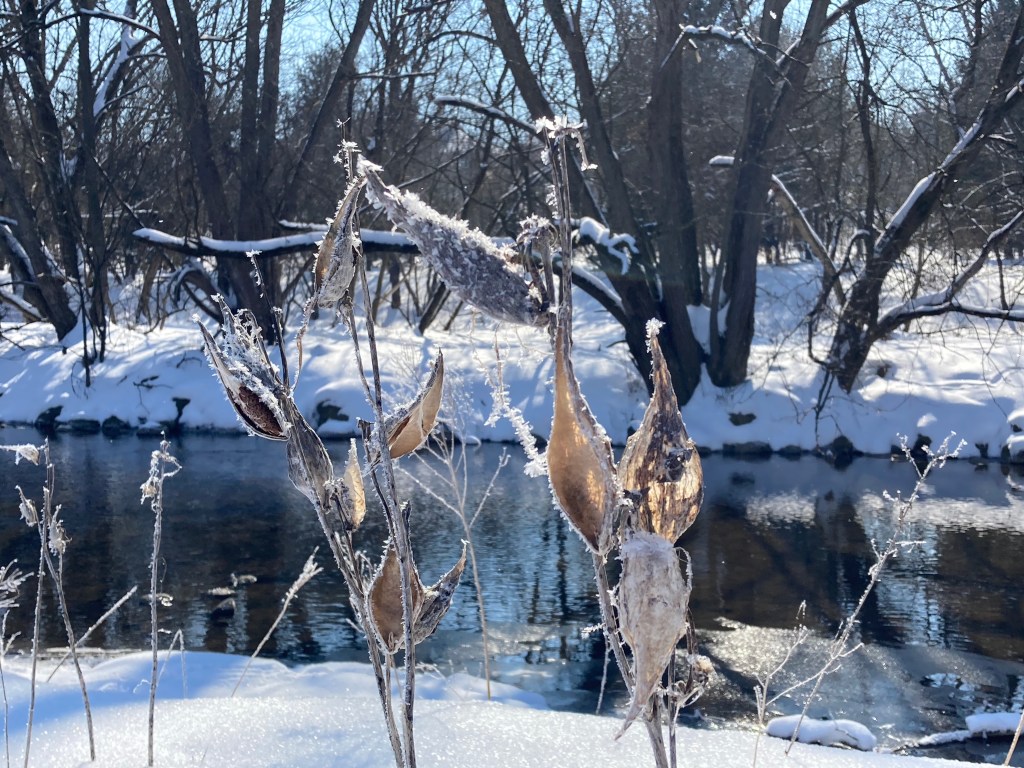
On one side of the river, you walk through a forested area, past Stratford’s Water Pollution Control Plant, then back into the forest. Further in, you get glimpses of house backyards that abut the natural area, with some residents creating an access path through their wooded backyards to connect to the trail. At the far end is a loop through an area that is relatively open but has been planted with native trees and, one day, will be forest, too.
On the other side, the same side as the cemetery, the path is more challenging: gnarly roots, muddy or icy conditions depending on the season, mini-bridges over gullies that sometimes are dodgy. It’s less busy although favoured by trail cyclists. Walking there, it’s hard to believe you’re in the city, still.
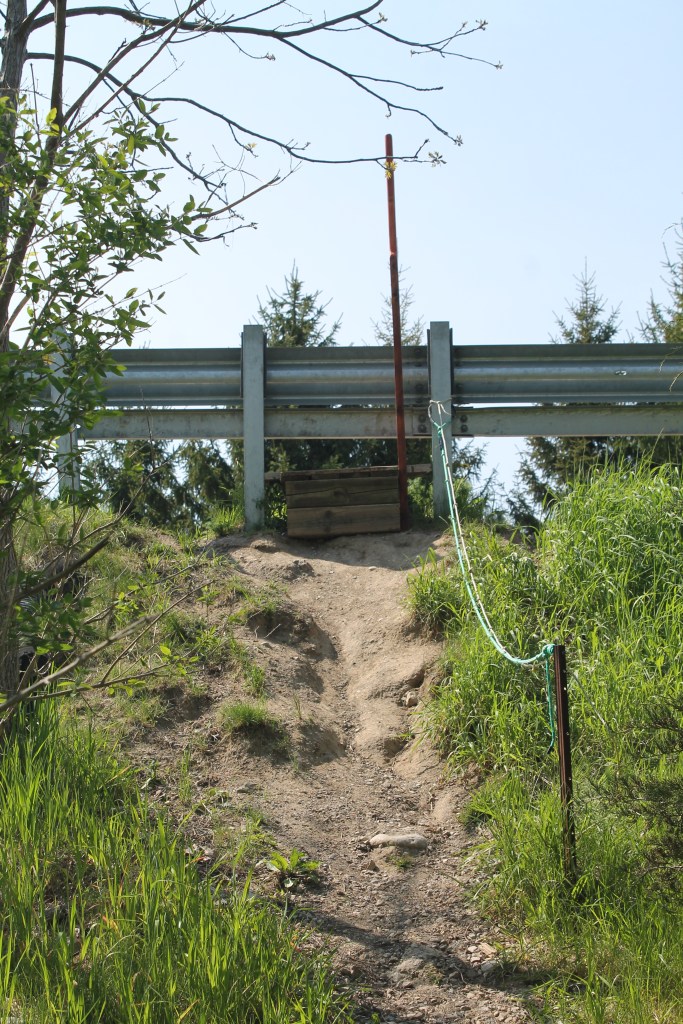
Getting from one side of the trail at the endpoint to the other side is, shall we say, a challenge. You need to clamber up a steep slope to the road – there is some rope railing installed on the wilder side – and then hoist yourself over a guardrail, walk over the road bridge (while cars whiz by far exceeding the 60 km/h speed limit there) and gird up for another guardrail hoist and then a steep, often slippery, goat-climb down the other side. One time we were on this adventure with experienced hikers and one of them landed on their butt and tumbled down the incline, so I approach this manoeuvre with extreme caution.
Two of my volunteer gigs focus on making the Old Grove both more accessible to residents, and a biodiverse natural area.
First, I serve on the Active Transportation Advisory Committee for the City of Stratford and, in the name of improved accessibility for cyclists and walkers using this in-city trail, we asked if a small footbridge could be put over the river at the path levels to connect them at the southwest end, before the big road bridge. Alas, because this is floodplain, the city says it won’t install a bridge unless it passes 100-year-flood standards and that means a much larger, extended footprint for a bridge structure, to the tune of $400,000-plus. We remain convinced there has to be a cheaper way to connect those river paths at trail’s end to create a safer way to walk or cycle the loop.
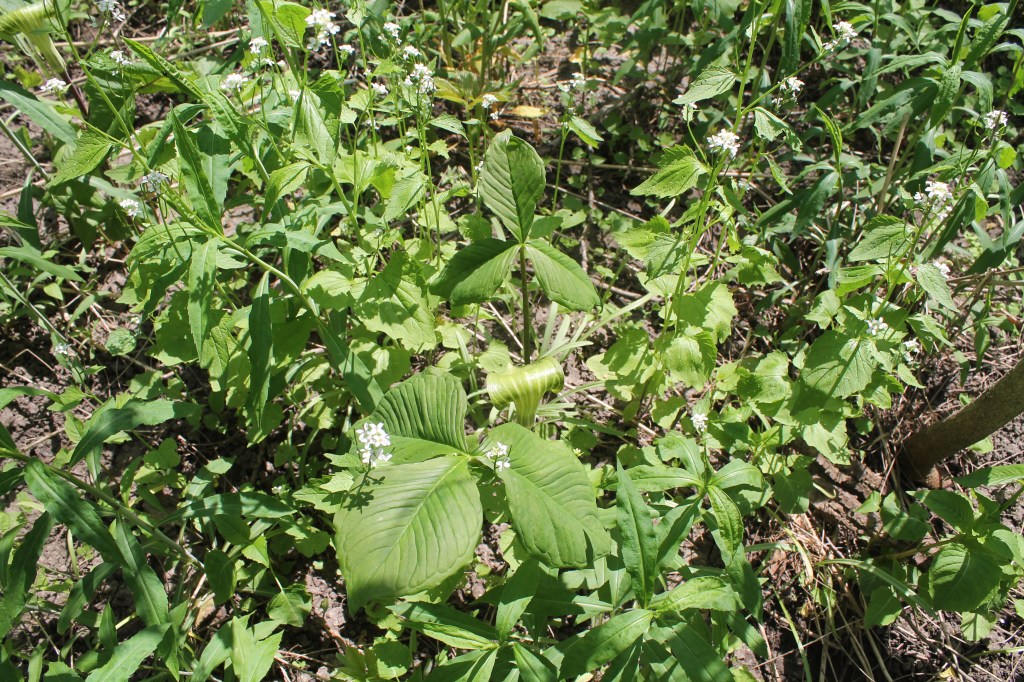
Second, Garden Stratford – the local volunteer horticultural society – and the city’s Energy and Environment Advisory Committee have sounded the alarm about the amount of invasive plant species that have taken root in this natural area. Periwinkle, buckhorn, Japanese Knotwood and phragmites (a kind of reed) – all of it has escaped from neighbouring gardens and taken over large areas of the Grove. Staff from the city and from the Upper Thames River Conservation Authority regularly cull invasive plants and teams of volunteers recruited through the garden group and the environment committee pull ground-cover invasives and reintroduce native plants, which get choked out by the invaders.
In 2026, the dominant nemesis is garlic mustard. On a recent spring walk in T.J. Dolan, this plant’s tiny white flowers dominated the forest floor.
As a Garden Stratford member, I recently got a notice that on Saturday, May 23, Garden Stratford and the Energy and Environment Advisory Committee are seeking volunteers for Round 2 of garlic-mustard tackling. “Garlic mustard is relatively easy to pull by hand, so bring gloves, buckets, and wheelbarrows or carts to help remove heavy full bags of plant material,” write the organizers. “The taproot of this plant is ‘S’ shaped – properly removing the whole root will help prevent the plant from growing back, so hand tools such as a Japanese knife or hand spade can also be useful.” Work starts at 9 a.m., with the launch points “by the entrances in the cemetery near the east end of Sir Adam Beck Road .”
The Grove has been a place to get away from the city, within the city, for generations. It will need ongoing attention to stem the tide of invasive plants taking over, and make it a bit easier for hikers and walkers to enjoy the full circle of pathways of this end of the Stratford Side Trail.
Photos: Kelley Teahen

Good story about the Old Grove , Kelley. Have walked both sides as an adult over the last few years and yes the north side can be challenging. At one time, as kids who lived on the cemetery side of the Old Grove, we used to catch pollywogs / tadpoles in the creek that fed the Avon . We caught them in jars and took them home hoping they would turn into frogs. They usually just ended belly up in the jars and smelled horrible. In those days ” Dunn’s Bridge ” ( new bridge now at O Loane and Lorne ) was not a busy crossing.
LikeLike