The city of Stratford is the largest municipality in Perth County, which has the highest concentration of pig farms in Canada. Yep: We have more pig farms in the 2,000+ square kilometres of Perth than exist in any other county or region in the 10 million square kilometres of this vast country.
Another from my husband’s seemingly endless clan of cousins, Sam Knechtel (first cousin, once removed), is one of those pig farmers. Sam is the hardest-working 28-year-old I have ever met. He is a university grad and full-time employee with Farm Credit Canada, with previous experience working as an account manager at a credit union. For a couple years, he was a beekeeper and honey seller. He has bought, renovated and rents out multiple multi-unit properties. And in 2022, Sam built a pig barn on the family farm, home to his grandparents, with the farm now being operated jointly among three separate generations.
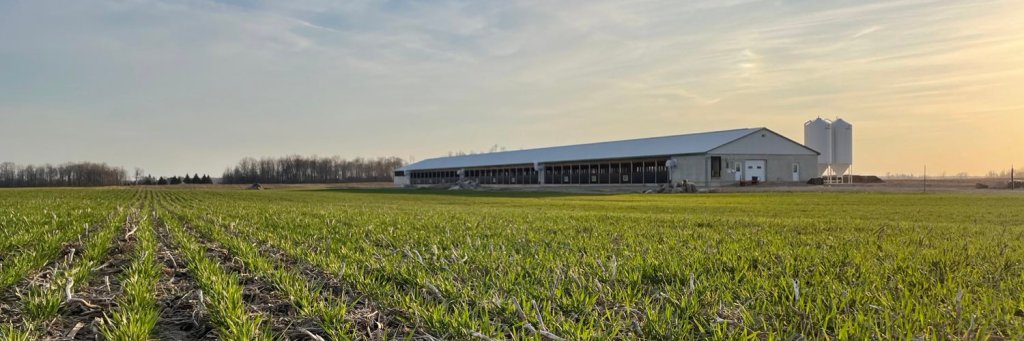
Sam gets young piglets, which he dubs “bacon seeds”, when they are around 28 days old. At that age, they are around 7 kg (15 pounds), and he raises them until they are around 135 kg (300 pounds). He’s with them before his day job for a checkover and feeding, and he’s back with them after the day job. When the pigs first arrive, they occupy only a small section of the vast one-storey rectangular barn, in large communal pens. As they grow older and bigger, the pigs get spread out until the barn is full. Once they’ve reached 135 kg at around five to six months old, they are shipped to an abattoir, and the cycle starts anew. Pigs not being raised for pork production can live around 15 to 20 years.
Checking out Sam’s operation was my first time in a pig barn. Two things surprised me (I had been forewarned about the pungent smell): little pigs run fast, their hooves clackety-clackety as they race around in a pack. And they don’t squeal or “oink”: they bark, like a frisky puppy, which is disconcerting for someone like me who loves dogs, but still eats pork, occasionally.
The presence of all those pig farms, including a few specialty ones that raise boar or heritage pig varieties such as Berkshire and Tamworth, affect the culture of this place.
Stratford is the home of the Ontario Pork Congress, founded in 1973 and held annually in June over two days, attracting 2,000 to 3,000 attendees. It takes over the Stratford Rotary Complex at the northwest corner of the city, and is primarily for those in the hog industry, although there is a “Hog Jog” fundraiser for local charity.
The Wild Hog Country Market at the edge of Stratford, opened in 2021, has become a local favourite for its café, local meats, produce, prepared foods and chi-chi pantry supplies. It’s run by the Bachert family, who had a farm-based meat raising and butchering business in nearby Huron County beginning in the 1960s.
There’s also the The Best Little Pork Shoppe in nearby Shakespeare, founded in 1987 and now on its third set of owners.
Pork, at least here, is a relatively inexpensive meat. McIntosh Farms, a vendor at the Stratford Farmers’ Market, makes pork schnitzel and enough for four servings costs under $10. A portion of smoked ham that will cover two brunches (at least for us) from Metzger Meats in nearby Hensall is around $4.
Students at the Stratford Chefs’ School learn quickly that pork is the go-to if you’re looking to prepare a great meal and keep costs under control. This school was founded in 1983 and culinary students do two years of study, with the current school operating from two locations along Ontario Street in Stratford. In one part of their curriculum, the student chefs need to cost out meals to match a set budget; in these student-designed menus, there are often budget-friendly pork dishes featured, albeit gussied up to be “Poppyseed-Crusted Pork Tenderloin with Red Pepper Relish, Crisp Cabbage, and Tamarind Jus” or “Slow-Roasted Pork Shoulder with Baked Beans and Nova Scotia Brown Bread.”
There’s also the arts-and-farming cross-pollinated local joke about the prevalence of “hams” here: Theatre performers from the Stratford Festival who “ham it up”, and the pig meat hams. The limited TV series Slings and Arrows pays sarcastic homage to this trope, as I mentioned in Their Outrageous Fortune, an earlier Teahen Tale. In the first episode of the first season, the artistic director of the fictional New Burbage Theatre Festival (based on Stratford) stumbles drunkenly out of a bar, falls over on the road, and is run over by a truck driver whose truck is emblazoned with the sign, “Canada’s finest hams.”
In researching All Things Pig, I found what might be the ultimate Stratford ham duality: In the first half of the 20th century, Whyte Packing Co., based in Stratford from 1900 to the 1960s when it closed, was among the largest hog processing companies in Canada. It was founded in the 19th century by Scottish immigrant John Whyte Sr. And Whyte’s offspring? Among them is his great grandson, Tom Patterson, Founder of the Stratford Festival of Canada. From Whyte hams to Hamlet: hog wild, indeed.
