What makes a great kitchen?
For me, it’s ease of movement: being able to pivot on one foot to reach here, there and the next place as you are putting together a meal. There needs to be enough storage for food, dishes, pots, pans, cutlery and all the rest. Surfaces should be easy to clean. Cupboards should be built for maximum efficiency: no blind corners or places where you have to get on your hands and knees and thread your torso into the cupboard to get something at the back. I also like a place to sit in a kitchen, whether at an island or a cozy table.
The kitchen in the Stratford house currently being renovated checked only one of those boxes: there was space for a little table and two chairs in the bay window overlooking the house’s enclosed side yard. But there was more than three metres between stove and sink; every cupboard (some with rickety plywood doors) required frustrating manouevring; some of the countertop was tile. I don’t care how stylish tile might look (and this stuff didn’t rank high on the beauty scale), it is ghastly — GHASTLY, I shout — in a kitchen counter. You try getting bell pepper seeds that fly off the cutting board out of those nasty grout grooves.
Knowing that, somewhere down the road, we had a kitchen renovation ahead, in the past three years I started looking more closely at other people’s kitchens.
I was charmed by a Toronto neighbour’s open shelving: she is a big baker and cooks mostly plant-based meals, and her shelves held glass canisters of baking supplies, dried beans and grains, along with neat stacks of plates, “Never again,” she said, firmly, when I commented on how pretty her kitchen looked. “I hate it. Nothing stays clean.”
The “clean” concern resonates with me. I prefer upper cupboards that go to the ceiling, rather than have an open area at top where the only things being stored are dust and muck. I like an island to be a solid surface (preferably butcher block for things like dough-rolling) without a stove top or sink inserted. When I started researching sinks, I discovered that an under-mount sink would eliminate the sink-meets-counter gunk zone you get with a top-mount sink.
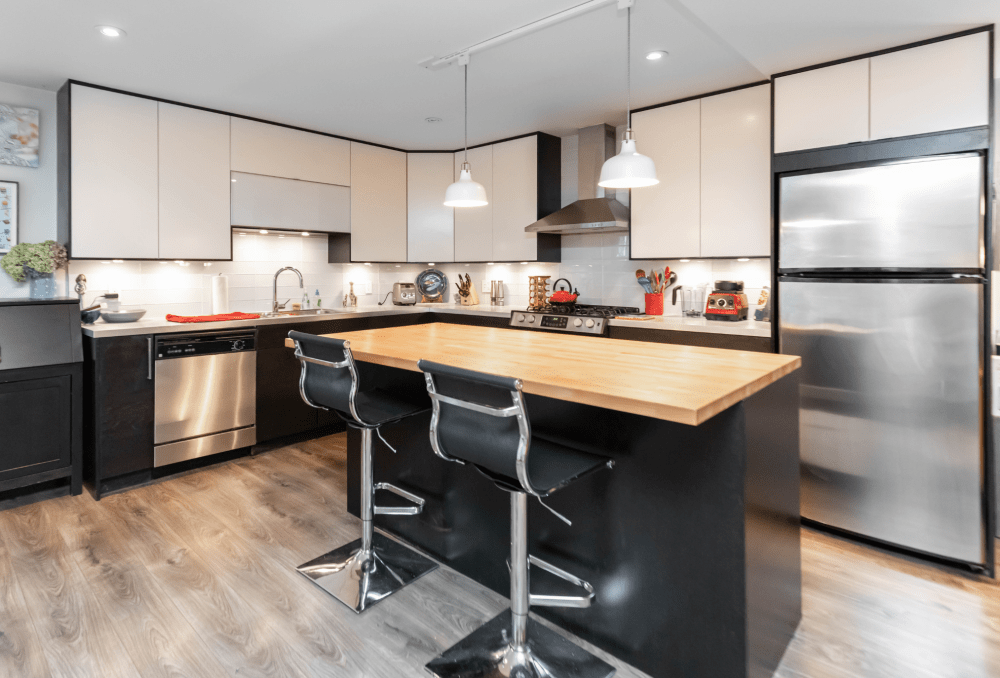
I had been fortunate to find an apartment in Toronto, a decade ago, that had a wonderfully functional kitchen. I remember walking into the space, seeing a good-sized island with butcher-block top and, behind that, a gas stove. In a rental. I believe I laid my cheek on the island and put my arms around that island in a hug. It became the place’s hearth for daily living and dinner parties.
That kitchen had some pain points. There were no handles on the sleek upper cupboard doors apart from a thin, hidden metal strip along the bottom edge and that tiny piece of metal could, and did, draw blood if you grabbed at it quickly. Style, one; function, zero. There was wasted cupboard space at the juncture of the L-shaped lower cabinet. But that space taught me that having a microwave low (tucked into the island) was a great placement; that cooking is easier with decent counter space on both sides of your stove; and that over-island lighting should be made of something relatively indestructible — this lesson learned after my cleaner inadvertently smashed a glass fixture over the island when she lifted a mop out of a pail.
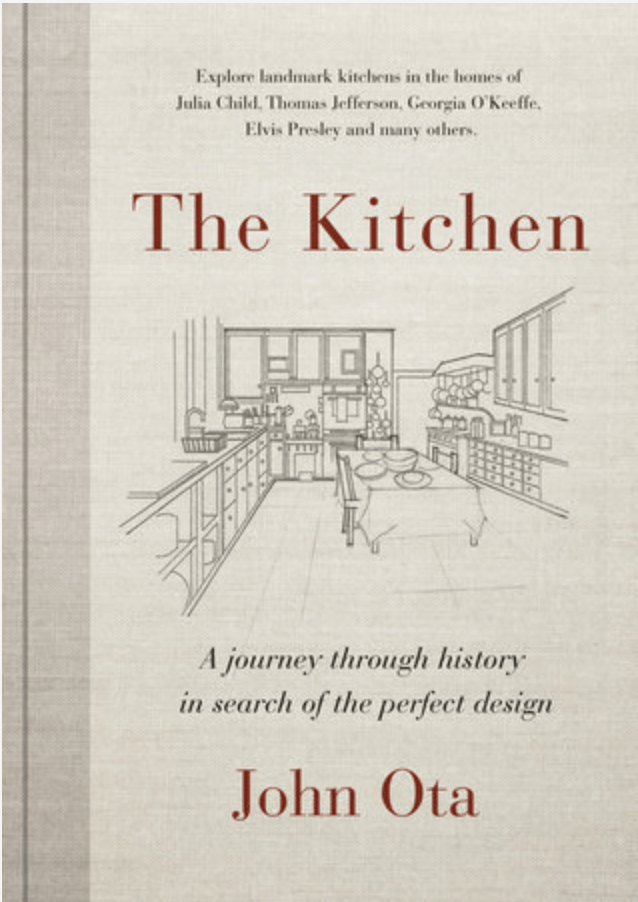
The last public event we attended in March 2020 before COVID-19 restrictions sent us all home was a reading by John Ota from his book The Kitchen: A journey through history in search of the perfect design. Ota is a retired Canadian architect who wanted to renovate his own kitchen and he went on a quest to visit and, where possible, cook in famous kitchens. It’s a wonderful book that follows his travels throughout Canada and the U.S. with stops at Julia Child’s kitchen now housed at the Smithsonian in Washington (pictured in this post’s cover image), Thomas Jefferson’s Monticello, Spadina House Toronto, Georgia O’Keeffe’s New Mexico home, Elvis Presley’s Graceland, Kentuck Knob in Pennsylvania designed by Frank Lloyd Wright, and many more. After Ota explores each kitchen, the chapter ends with a letter home to his wife, musing on what features might suit their upcoming renovation. In my travels, I’ve seen three of the 13 kitchens he documents (Julia Child, Kentuck Knob and Spadina House) although the closest to a modern dream kitchen is one owned by Ota’s friends on Vancouver Island. It has spectacular views and a kitchen incorporated into a large, open gathering space.
A dream kitchen today is very different than one from the 18th or 19th century — the rise of electricity and the decline of live-in servants being the two biggest forces. Fashion whipsaws between everything being out in the open and at hand (Julia Child’s kitchen being the pinnacle of this) to everything being so hidden that you might not even think you were in a place to cook food. Thumbing through decorating magazines, I’ve seen enormous contemporary kitchens with a spectacular amount of whiz bang and appliances. Wine fridges, dual ovens, warming ovens, six-burner cooktops, dual kitchens (with the messy stuff out of guest view), fridges with see-through doors, multiple sinks, crystal chandeliers.
For me, it’s about fitting the dream into the space we have, at a price we can afford. So there will be no see-through fridge or six-burner cooktop: but there will be a sweet island, and easy-to-grasp door handles, of that you can be sure.
